


Church & Liturgy
“Lex Orandi, Lex Credendi, Lex Vivendi.”
As one prays, so one believes, so one lives.
Learning to Pray
This ancient maxim of the Church highlights the truth that our prayer and worship forms us more than anything else.
The most significant portion of the boys’ formation will take place during the Daily Office and at the weekly celebration of the Mass. The boys will learn to worship and to pray– their two greatest needs– and gain the freedom that wells up into songs of praise. Their hearts will grow with their voices, and their attention spans will deepen and intensify as they gradually come to control their thoughts and reflections. They will worship the Lord in the beauty of holiness while they learn to center their lives, like their schedules, around the church.
Life in the church will extend beyond the walls of the chapel. Each movement of the day’s schedule, tolled out by the church bell, not alarms on a phone or PA system, will teach the boys to view all of their activities under the light of God’s Kingdom and their work in it.
Morning and Evening Prayer, said by the whole school community– faculty, staff, students, and faculty families – will allow worship through chanted prayer and beautiful hymns to set the devotional tone needed to consecrate all work and play to God, and then to give thanks for all the day’s blessings as the sun sets.
Church, Not Parachurch
- The Anglican Province of America’s Diocese of the Eastern United States (DEUS) will furnish the school with a full-time priest to oversee the chapel and help govern the school. The school’s administration will work with the Bishop of the diocese to ensure a fitting chaplain serve in the school.
- The chaplain will be the main theology instructor, and have a central role in mentoring and training the boys.
- The boys for this school will be drawn from Christian homes where the parents desire spiritual formation for their sons. Students must be baptized Christians to attend, but do not need to belong to an Anglican church, as long as they are willing to participate in and be formed by the church’s Daily Office and Holy Communion service, both of which will be drawn from the Book of Common Prayer (1928).
Sacred Time
- The school’s schedule will be built around the Church Calendar, not the observance of secular time. Instead of “Labor Day” and “Memorial Day” offering a break from work, the boys will begin and end their school terms on Feast Days, and their time back home with family will come during particularly meaningful seasons of church life.
- Advent, for example, will be spent back home with family, and the boys will get a break from the rigors of boarding school life to focus on prayer, celebration, and cultivating expectation of Christ’s second Advent. The boys will return to the school on the Feast of Epiphany. Holy Week and Easter week will both be spent home with family as well.
A Beautiful Place to Pray and Worship
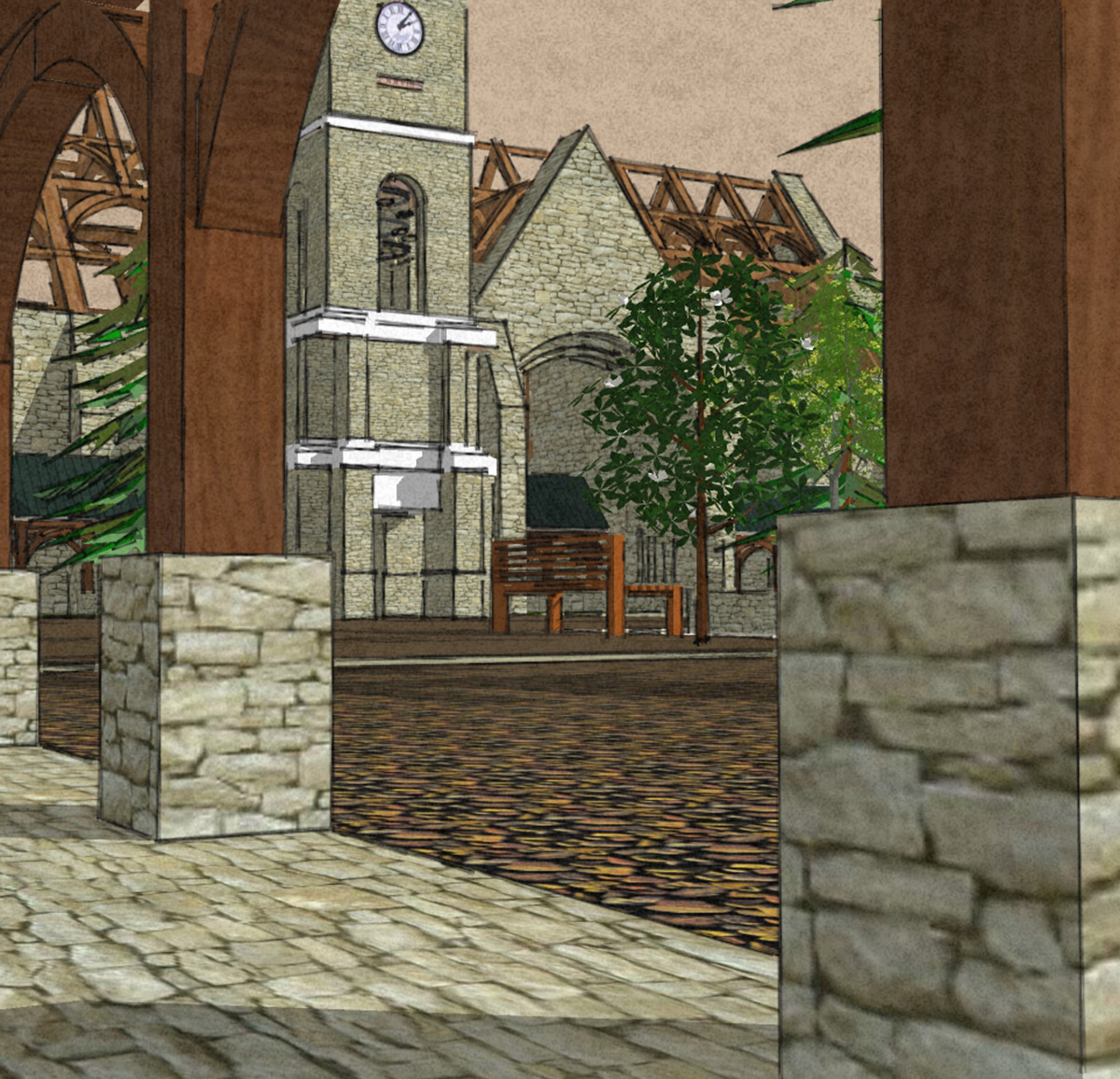
Ultimately, the central architectural feature of the campus will be a beautiful chapel — a concrete expression of how the school’s life flows from the Church. There the boys will encounter the richness of Christian tradition in liturgical color, stained glass, and cruciform architecture as they “worship the Lord in the beauty of holiness” (Ps. 96:9).